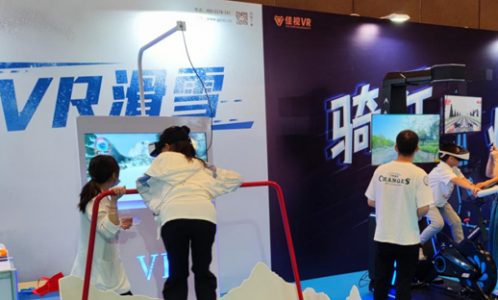
With the rapid iteration of virtual reality (VR) technology and the upgrading of consumer demand, immersive experience has become the core competitiveness in fields such as cultural tourism, education, and entertainment. Relying on its advantages of high simulation, high safety, and strong interactivity, VR driving simulators have gradually become the core experience project of various experience halls, covering multiple dimensions including entertainment and leisure, popular science education, skill training, and commercial customer attraction. They inject new vitality into experience halls and promote the upgrading and innovation of driving-related experiences. VR driving simulators are not simple “virtual toys”, but comprehensive equipment integrating multiple fields such as virtual reality, augmented reality, sensors, computer graphics, and vehicle dynamics. Their core value lies in “simulation restoration” and “safe controllability”, which breaks the time and space limitations of traditional driving experiences, deeply integrates virtual driving with real feelings, not only enriches the service content of experience halls, but also broadens the communication path of related industries, becoming an important carrier connecting technology and public experience. This article will comprehensively analyze the important role of VR driving simulators in experience halls from five core dimensions: entertainment experience, popular science education, skill training, commercial operation, and industry empowerment, combined with practical application scenarios, to show their diverse value and development potential.
I. Enrich Entertainment Experience Scenarios and Create a New Choice for Immersive Leisure
In various entertainment and leisure experience halls, the core role of VR driving simulators is to break the limitations of traditional entertainment modes, provide consumers with immersive and diversified driving entertainment experiences, meet the leisure needs of different age groups and demand groups, and become the core highlight of experience halls to attract customers. With the upgrading of consumption, entertainment and leisure experience halls have gradually become important places for people to relax and interact with their children. With its strong interactivity and high interest, VR driving simulators have quickly become a popular project in such experience halls, mainly targeting family groups and young consumer groups, creating differentiated immersive entertainment experiences, and making up for the shortcomings of traditional driving entertainment such as “single experience, high risk, and limited scenarios”.
For young consumer groups, the “speed and passion” brought by VR driving simulators is irreplaceable by traditional entertainment projects. Different from ordinary video games, VR driving simulators can 1:1 restore the visual, auditory, and tactile experiences of real driving through head-mounted displays, high-precision steering wheels, simulated pedals, six-axis motion platforms and other equipment, making the experiencer feel as if they are in a real driving scene. Whether it is simulating the speed of F1 racing, the mountain shuttling of off-road vehicles, or the galloping of supercars on urban roads, VR driving simulators can accurately restore the acceleration push feeling, cornering centrifugal force, braking vibration, and even the road bump feedback of the vehicle, allowing the experiencer to experience the excitement and fun of real driving in a safe environment. At the same time, some experience halls have introduced multiple dynamic racing simulators to build a local area network competitive platform, allowing experiencers to form teams to participate in virtual racing competitions, displaying real-time race results and rankings, enhancing the fun and excitement of competition, meeting the competitive needs of young people, promoting interactive communication between experiencers, and improving the experience atmosphere of the experience hall.
For family groups, VR driving simulators have created a new scene of “parent-child interaction” and realized the dual value of “entertainment + education”. Experience halls usually set up simplified operation car simulators to reduce driving difficulty, allowing children to simulate urban road driving, parking lot parking and other scenes under the guidance of their parents, which not only exercises children’s hands-on ability, reaction ability and spatial judgment ability, but also enhances the interaction and tacit understanding between parents and children. For example, the “parent-child driving park” set up in some entertainment experience halls, combined with interesting scene design, allows children to initially understand basic driving knowledge and cultivate a sense of civilized travel in a relaxed atmosphere, while parents can guide their children to establish the concept of safe driving through accompanying experience, realizing “education through entertainment”. In addition, VR driving simulators also support multi-player online experience. Family members can jointly participate in virtual driving tasks, such as teaming up to complete interesting tasks such as “urban treasure hunting” and “road rescue”, further enhancing the fun of family interaction and making the experience hall one of the preferred places for family leisure.
In addition, VR driving simulators can also meet the personalized entertainment needs of consumers. Through functions such as scene customization and vehicle model customization, experiencers can choose driving scenes, vehicle models and difficulty according to their own preferences, realizing a “one size fits all” entertainment experience. For example, experiencers who like adventure can choose complex scenes such as “mountain off-road” and “desert crossing”; those who like retro style can choose classic models to simulate driving scenes of different eras; they can even simulate driving experiences under special weather conditions such as rainy days, foggy days and nights, enriching the diversity of entertainment experiences, allowing experiencers to get a new experience every time they visit the hall, and improving the repurchase rate of the experience hall. According to relevant research data, the customer flow attraction of entertainment experience halls equipped with VR driving simulators is more than 40% higher than that of ordinary experience halls, and the repurchase rate is increased by 35%, which fully reflects its important role in enriching entertainment experience and attracting customers.
II. Strengthen the Function of Popular Science Education and Innovate the Mode of Traffic Safety Publicity
In public welfare or educational venues such as traffic safety education experience halls and youth popular science experience halls, the core role of VR driving simulators is to break the limitations of traditional “preaching-style” popular science, convert abstract traffic safety knowledge into concrete immersive experiences, let experiencers feel traffic risks in “personal driving”, master safety skills, improve traffic safety awareness, and become an important tool for traffic safety popular science. Traditional traffic safety publicity is mainly in the form of posters, videos, lectures, etc., which are single and boring, making it difficult for experiencers to truly understand the importance of traffic rules. However, through scene restoration and interactive experience, VR driving simulators make popular science education more interesting, targeted and effective.
VR driving simulators can accurately simulate various traffic scenes, especially dangerous scenes, allowing experiencers to intuitively feel the hazards of traffic violations in a safe and controllable environment, thereby establishing a correct driving concept. For example, simulating the consequences of common violations such as drunk driving, fatigue driving, speeding, and running red lights. During simulated driving, experiencers will feel blurred vision and delayed operation when drunk driving, double vision and slow reaction when fatigued driving, extended braking distance when speeding, and collision risk when running red lights. These real somatosensory feedbacks are more impactful than traditional publicity posters and video explanations, enabling experiencers to deeply realize the hazards of traffic violations and consciously abide by traffic rules in real life. In the VR safety experience hall of Lianzhou Chunfeng Work Center, experiencers put on helmets and sit on dynamic seats. When the virtual vehicle collides, the seats vibrate violently and the safety belts tighten instantly. The realistic somatosensory feedback makes experiencers subconsciously grasp the armrests. This “zero-risk trial and error” immersive experience makes traffic safety education deeply rooted in people’s hearts.
For experiencers of different age groups, VR driving simulators can provide personalized popular science content to adapt to the cognitive characteristics of different groups. For teenagers and children, experience halls usually set up interesting simulation projects such as “Traffic Sign Primary School” and “Children’s Driving Park”. For example, the “Traffic Sign Primary School” simulator launched by Beijing Automotive Museum allows experiencers to drive virtual karts to race on the track. In the process, they need to identify various traffic signs to get good results, and remember the meaning and function of traffic signs in interesting interaction; “Car Car World” is for children under 1.4 meters, creating a virtual urban driving scene, allowing children to initially understand basic driving knowledge and cultivate a sense of civilized travel in a relaxed atmosphere. For teenagers over 1.4 meters, there is also a youth driving training camp, which allows teenagers to understand the principle of vehicle operation and driving skills through simulating urban road driving, and establish a correct driving concept.
For adults, VR driving simulators focus on setting up dangerous scene simulation and emergency skill training projects to improve adults’ emergency response capabilities. The “Collision Experiment” simulator of Beijing Automotive Museum allows experiencers to operate equipment to feel the violent vibration when a car collides, understand the working principle and triggering conditions of airbags, and deeply realize the importance of safe driving; the “Driving Expert” project simulates various dangerous scenes in road driving, such as pedestrians suddenly crossing the road and non-motor vehicles changing lanes irregularly, allowing experiencers to practice emergency judgment and avoidance skills in a high-pressure environment, and improve their ability to respond to sudden situations. In addition, some experience halls also have “Safe School Bus Experience Camp”, which combines 1:1 school bus simulation with videos to let experiencers learn school bus safety knowledge and improve students’ self-rescue and escape capabilities, covering the traffic safety education needs of all age groups.
The data feedback system further improves the effect of popular science education and realizes a closed teaching loop. After each simulation, the system will generate a three-dimensional report including operation mistakes, reaction time, and danger prediction ability, allowing experiencers to clearly understand their own shortcomings, so as to learn traffic safety knowledge in a targeted manner. After a community introduced VR education, the pedestrian traffic accident rate decreased by 47%, and the mastery rate of traffic rules among teenagers increased from 58% to 92%, which fully proves the important value of VR driving simulators in traffic safety popular science. According to relevant data, the awareness rate of traffic rules and emergency response capabilities of people who have experienced immersive VR driving simulators have increased by more than 60%, which has effectively promoted the popularization of traffic safety knowledge and provided strong support for social traffic safety governance.
III. Provide Professional Skill Training and Reduce Training Costs and Risks
In professional venues such as driving training experience halls and vocational skill experience halls, the core role of VR driving simulators is to provide professional driving skill training for experiencers, break the limitations of traditional driving training such as “limited venues, high costs, and high risks”, improve training efficiency, reduce training costs, and become an important auxiliary tool for driving skill training. With the continuous increase in the number of cars, the number of people learning to drive is increasing year by year. The traditional driving training mode is facing problems such as tight venues, insufficient coach resources, high fuel costs, and high safety risks. The emergence of VR driving simulators provides a new solution for the upgrading of the driving training industry, and also makes driving training experience halls the preferred place for more and more people to learn to drive.
VR driving simulators can simulate real driving training scenes, covering all training content from Subject 1 to Subject 4, allowing experiencers to practice repeatedly in a virtual environment and master driving skills proficiently. For example, simulating Subject 2 projects such as reversing into a parking space, parallel parking, right-angle turning, curve driving, and stopping and starting at a slope. Experiencers can practice repeatedly until they master the operation skills proficiently, without worrying about venue limitations and vehicle wear and tear; simulating Subject 3 road driving skills, including getting on the car to prepare, starting, driving straight, shifting gears, changing lanes, pulling over to park, etc., allowing experiencers to be familiar with the process and skills of road driving and improve road driving ability. Compared with real driving training, VR driving simulators do not need to occupy a large area of venues, do not need to bear vehicle wear and tear, fuel consumption and safety risks, and can simulate driving scenes of different vehicle models, road conditions and weather according to needs, realizing full-scene simulation from basic operations to complex emergencies.
For novice experiencers, VR driving simulators can effectively relieve driving tension and help them quickly establish a “sense of vehicle”. In traditional driving training, novices are prone to tension and fluster due to lack of driving experience, which affects the training effect and may even cause safety accidents. However, VR driving simulators are in a closed and safe environment, allowing experiencers to gradually familiarize themselves with driving operations and establish driving confidence without pressure. At the same time, VR driving simulators also have special functions such as “transparent body”, “eagle eye function”, and “vehicle trajectory”. Students can analyze the causes of mistakes by themselves or with the help of AI. For example, if they step on the clutch but the car does not start, the driver will analyze the data and tell the students that it is because they did not release the handbrake or the combination of oil and clutch is not good, helping experiencers quickly find their own shortcomings and improve in a targeted manner, thus improving training efficiency.
In terms of training costs, VR driving simulators can greatly reduce the operating costs of driving training experience halls. Traditional driving training requires a lot of funds to buy training cars, rent training venues, pay fuel costs and coach salaries. After the one-time investment of VR driving simulators, the subsequent operating costs are mainly equipment maintenance and power consumption, which are much lower than traditional driving training. According to statistics, intelligent teaching methods such as VR driving simulators can save 90% of labor costs, 50% of venue and practice road costs, and 50% of vehicle use costs and fuel consumption. For example, after a logistics enterprise in Shenzhen introduced VR driving simulators through equipment leasing, the training cycle for new drivers was shortened by 70%, and the accident rate decreased by 55%, which greatly reduced training costs and safety risks. For experiencers, the cost of VR driving training is relatively low, which can meet the training needs of more people and improve the market competitiveness of driving training experience halls.
In addition, VR driving simulators can also provide professional driving training for special professional groups, such as truck drivers, bus drivers, special vehicle drivers, etc. By simulating the driving scenes and operating environments of special vehicle models, experiencers can be familiar with the operation skills and safety specifications of special vehicles, improve professional driving skills, and reduce professional driving risks. For example, simulating the “death radius” when a muck truck turns, allowing experiencers to intuitively understand the blind spot risks of special vehicles and master safe driving skills; simulating scenes such as bus stopping and passenger getting on and off, allowing experiencers to be familiar with bus driving specifications and improve service quality. With the in-depth involvement of 5G + AI technology, VR simulated driving is moving towards personalization and intelligence. The new “virtual-real integration” model allows students to complete basic training in VR and then seamlessly connect to intelligent training cars equipped with more than 20 sensors, realizing a smooth transition from virtual to real, and further improving the training effect. After a driving school in Xi’an adopted AI coaches + VR simulation, the pass rate of students in Subject 2 jumped from 62% to 90%, and the training cycle was shortened by 40%, which fully reflects the important role of VR driving simulators in skill training.
IV. Help Upgrade Commercial Operations and Enhance the Core Competitiveness of Experience Halls
For various commercial experience halls, VR driving simulators are not only an experience project, but also an important support for improving the core competitiveness of the venue and realizing commercial profits. They play an important role in customer attraction, revenue increase, brand building, etc., helping experience halls achieve sustainable development. In the current context of the rapid development of the experience economy, consumers’ needs are becoming more and more diversified. Simple traditional experience projects can no longer meet consumers’ needs. As a new type of immersive experience project, VR driving simulators can help experience halls create differentiated advantages, attract more customers, and improve commercial value.
In terms of customer attraction, VR driving simulators have become the “traffic password” of experience halls with their novel and unique experience characteristics. With the popularization of VR technology, more and more consumers are curious about VR experiences. As a VR project close to life and with strong interactivity, VR driving simulators can attract consumers of different age groups to experience, especially young consumer groups and family groups. Experience halls can highlight the characteristics of VR driving simulators through online publicity, offline experience activities, co-branding cooperation and other methods to attract consumers to visit the store, thereby driving the overall customer flow of the venue. For example, some experience halls cooperate with short video platforms to release short videos of VR driving experiences, attracting a large number of netizens’ attention and driving the growth of offline customer flow; cooperate with schools and enterprises to carry out popular science experience activities and team building activities, expand the influence of the venue, and increase the scale of customer flow. According to relevant data, the customer flow of commercial experience halls equipped with VR driving simulators is on average more than 50% higher than that of venues without them, becoming the core driving force for venue customer attraction.
In terms of revenue increase and profit making, VR driving simulators can open up new profit channels for experience halls and improve the revenue level of the venue. The experience fee of VR driving simulators is relatively high, usually charged according to experience time or experience projects, which can bring stable income to the venue; at the same time, experience halls can launch personalized paid services combined with VR driving simulators, such as customized experience scenes, professional driving training courses, membership packages, etc., to further increase revenue. For example, launching “VR driving membership cards”, members can enjoy privileges such as priority experience, discount benefits, and exclusive scenes, improving user stickiness and increasing repurchase rate; launching professional driving training courses, providing targeted training services for experiencers who want to learn to drive, charging training fees, and expanding profit channels. In addition, VR driving simulators can also cooperate with enterprises and advertisers to carry out brand placement, advertising and other activities, such as placing enterprise logos and product advertisements in simulated scenes, to obtain additional advertising income. Data from an innovative enterprise shows that the proportion of value-added service income based on VR driving simulators has reached 34%, which fully reflects its potential in increasing revenue and profits.
In terms of brand building, VR driving simulators can help experience halls establish a “technological, fashionable and innovative” brand image and improve the visibility and reputation of the venue. In the current era of rapid technological development, consumers’ demand for technological experience projects is increasing day by day. Experience halls equipped with VR driving simulators can convey the brand concept of “keeping pace with the times and focusing on experience” to consumers, distinguish themselves from traditional experience halls, and create differentiated brand advantages. At the same time, experience halls can continuously upgrade the equipment and scenes of VR driving simulators, improve the experience quality, accumulate a good user reputation, and expand the influence of the venue and improve brand visibility through user word-of-mouth communication. For example, some high-end experience halls have introduced high-end VR/AR composite simulators, combined with head-mounted equipment and environmental projection, to realize the superposition of virtual scenes and real environments, creating an immersive driving experience. Some products have a simulation degree of more than 90%, which can accurately restore the power response, road feedback and surrounding environment details of the vehicle. With high-quality experience, they have established a good brand image and attracted a large number of high-end consumers to experience.
In addition, VR driving simulators can also help experience halls optimize operation management and improve service quality. Through the background management system of VR driving simulators, experience halls can real-time monitor the operation status of equipment, timely find and solve equipment failures, and ensure the smooth progress of the experience; at the same time, they can collect experience data of experiencers, analyze the needs and preferences of experiencers, and optimize experience projects and service processes in a targeted manner to improve the satisfaction of experiencers. For example, by analyzing the experience time, preferred scenes, operation mistakes and other data of experiencers, adjust the scene settings and difficulty coefficients, and launch experience projects more in line with the needs of experiencers; according to the feedback of experiencers, optimize the service process of staff, improve the service level, and further enhance the core competitiveness of the experience hall.
V. Empower the Coordinated Development of Industries and Promote the Innovation and Upgrading of the Experience Industry
The role of VR driving simulators in experience halls is not limited to the venue itself. They can also empower the coordinated development of related industries, promote the innovation and upgrading of the experience industry, form a coordinated development model of “experience hall + VR technology + related industries”, and achieve win-win results for all parties. VR driving simulators integrate technologies in various fields such as VR technology, automotive technology, and educational technology. Their wide application in experience halls can drive the technological innovation and industrial upgrading of related industries, and inject new vitality into the development of the experience industry.
In the automotive industry, VR driving simulators provide a new display and promotion channel for automotive brands. As an important carrier for displaying the development of the automotive industry, conveying automotive brand culture, and connecting automotive enterprises with consumers, the application of VR driving simulators makes automotive culture move from “static display” to “dynamic experience”, enhancing the interest and appeal of cultural communication. Automotive enterprises can cooperate with experience halls to integrate their own vehicle models and technologies into the experience scenes of VR driving simulators, allowing consumers to experience the performance and driving feeling of cars in a virtual environment, understand the brand culture and technical advantages of cars, and thus improve brand visibility and product sales. For example, the “VR Driving Café” driving test simulator launched by Guangzhou Nantuo Software Technology can not only be used for driving training teaching, but also be adapted to automotive culture experience halls, allowing experiencers to put on VR glasses and experience the driving texture of different brand models in a virtual environment, and understand the various configurations and performance advantages of the vehicle. The LeMay – America’s Car Museum in the United States has introduced the CXC MP3 sports professional racing simulator, combined with professional racing software, to accurately simulate the aerodynamics and vehicle dynamics of real tracks, allowing experiencers to feel the acceleration, braking and cornering experience of high-performance racing cars and convey automotive sports culture.
In the VR technology industry, the wide application of VR driving simulators in experience halls can promote the popularization and innovation of VR technology. With the continuous improvement of experiencers’ requirements for VR driving experience, VR technology needs to be continuously upgraded to improve image clarity, operation smoothness, somatosensory feedback accuracy, etc., thereby promoting the innovative development of VR hardware equipment and software technology. For example, to improve the immersion of VR driving, VR equipment manufacturers continue to develop high-resolution and high-refresh-rate head-mounted displays, optimize the somatosensory feedback technology of six-axis motion platforms; software developers continue to enrich the scenes and functions of VR driving, and improve the authenticity and interest of simulation. At the same time, as an important application scenario of VR technology, experience halls can provide real user feedback for the research and development and testing of VR technology, help technology manufacturers optimize products, and promote the industrialization development of VR technology. According to IDC statistics, the global VR driving simulation training market size reached 1.58 billion US dollars in 2022, with a compound annual growth rate of 34.7%, showing broad market prospects.
In the education industry, VR driving simulators provide a new teaching model for traffic safety education and vocational education, promoting the innovation and upgrading of the education industry. The traditional traffic safety education and professional driving training models have many limitations. VR driving simulators make up for the shortcomings of traditional education models through the advantages of immersive experience, personalized teaching, and data-based feedback, and improve the effect of education and teaching. For example, schools can cooperate with experience halls to organize students to visit the hall to experience VR driving simulators, carry out traffic safety popular science education activities, let students learn traffic safety knowledge and improve safety awareness in the experience; vocational colleges can introduce VR driving simulators to carry out professional driving skill training, improve students’ professional skills, and transport high-quality professional talents for related industries. The Ministry of Transport of China issued the “Administrative Measures for Road Testing and Demonstration Application of Intelligent Connected Vehicles” in 2021, which clearly proposed that a supporting standard system for VR driving simulation training should be established. In the same year, the first mass-produced VR driving training equipment in Zhejiang Province was approved for listing. In 2023, the “Three-Year Action Plan for the High-Quality Development of the Metaverse Industry” listed VR driving training as a key development direction, and the coverage rate of local government supporting subsidy policies reached 65%, providing policy support for the application of VR driving simulators in the education field.
In addition, VR driving simulators can also promote the integrated development of the cultural tourism industry and create a new “VR + cultural tourism” experience model. For example, in cultural tourism experience halls, combining VR driving simulators with local cultural and tourism resources, simulating local characteristic road scenes and cultural landscapes, allowing experiencers to feel the local cultural charm in virtual driving, improve the interest and immersion of cultural tourism experience, and promote the transformation and upgrading of the cultural tourism industry. For example, the “Dancing Car” project set up in some experience halls three-dimensionally presents the nine gates of old Beijing through VR technology, combined with classic vehicle model simulation, allowing experiencers to feel the integration of history and modernity in driving, enriching the experience dimension of automotive culture, and also promoting the in-depth integration of cultural tourism and technology.
VI. Conclusion
The role of VR driving simulators in experience halls is diverse and far-reaching. They not only enrich the experience content of experience halls, improve the core competitiveness and commercial value of the venue, but also play an important role in popular science education, skill training, industry coordination, etc., becoming an important force for promoting the innovation and upgrading of the experience industry. From the perspective of entertainment experience, it provides consumers with immersive and diversified leisure choices, meeting the entertainment needs of different groups; from the perspective of popular science education, it innovates the mode of traffic safety publicity, making abstract popular science knowledge concrete and perceptible, and improving the effect of popular science education; from the perspective of skill training, it reduces training costs and risks, improves training efficiency, and provides a new solution for driving skill training; from the perspective of commercial operation, it helps experience halls attract customers, increase revenue, build brands, and achieve sustainable development; from the perspective of industry empowerment, it promotes the coordinated development of VR technology, automotive industry, education industry, and cultural tourism industry, forming a win-win industrial pattern.
With the continuous upgrading and popularization of VR technology, the functions and experiences of VR driving simulators will be continuously optimized, and their application scenarios in experience halls will be continuously expanded. In the future, it is expected to integrate more new technologies and elements, such as AI intelligent guidance, metaverse scenes, and multi-player online interaction, to further improve the experience quality and value. At the same time, with the continuous improvement of industry standards, the application of VR driving simulators will become more standardized, providing stronger support for the development of experience halls. It is believed that in the future, VR driving simulators will become an indispensable core experience project of various experience halls, inject more vitality into the development of the experience economy, bring more convenience and fun to people’s lives, and promote the sustainable and healthy development of related industries.